Synthesizers - My Music Gear Addiction
Beside the Holy Trinity of DX7, D-50 and M1 I own several other older synthesizers. Most of them from the late 1980s/early 1990.
My journey started with the first Yamaha DX7, then came a Roland D-50 and to make the trinity complete I had to add a Korg M1. At this point you could either stop collecting or fall into some kind of music gear addiction. Most of my synthesizers fall in the category of digital synthesizers or digital controlled analog synthesizers.
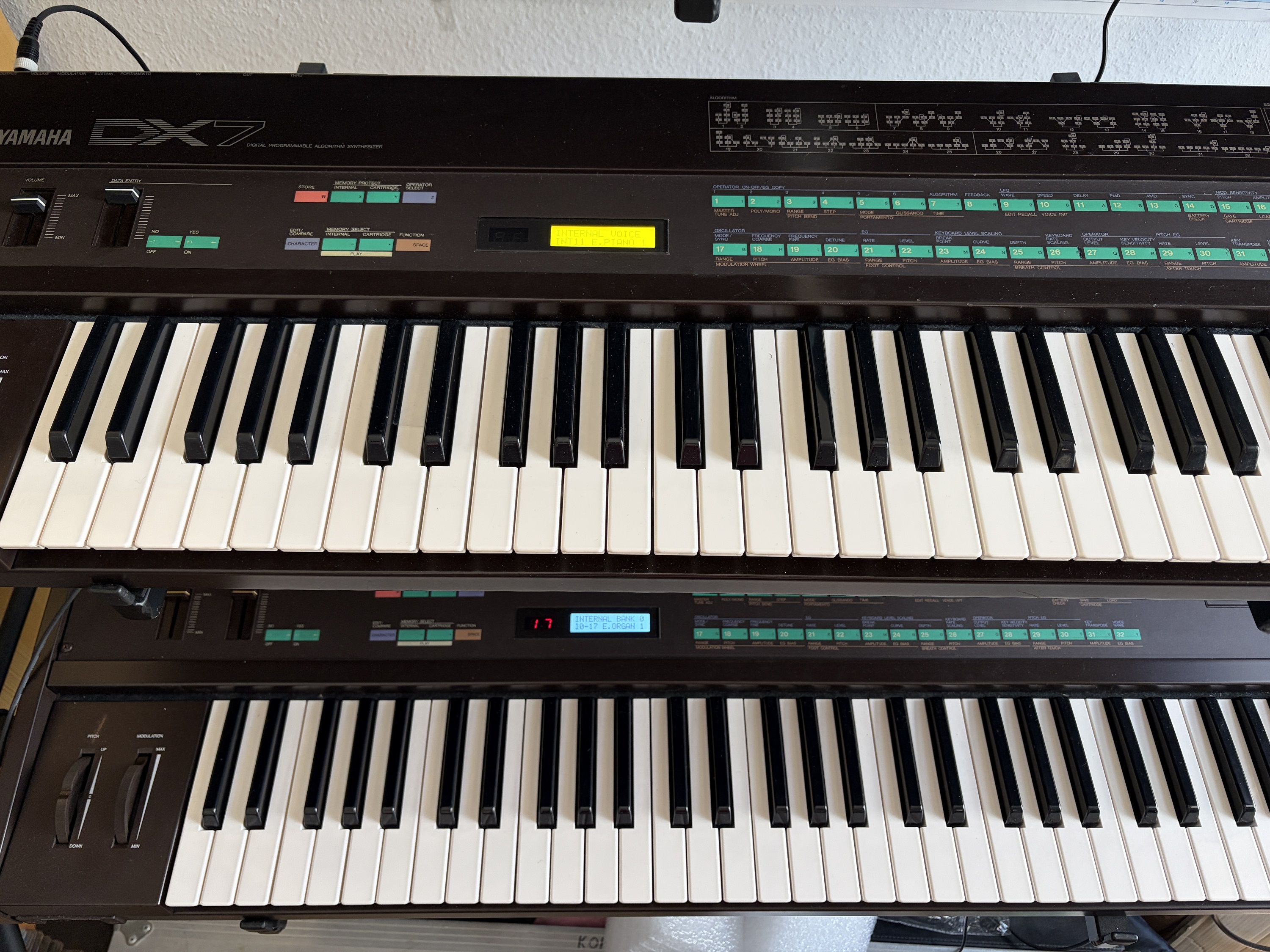
Yamaha DX7 - (MK I) - "Brownie"
Every household needs a DX7. I have upgraded the LCD on my DX7. It makes the display so much easier to read. One of my DX7 got a LCD with yellow/green backlight - which makes it quite "time accurate" as yellow backlighting was very common in the later 80s. The other LCD got a white backlight. While white LEDs came lot later (mid 90s) - when switched off the LCD looks similar as the OEM LCD without backlight. The "white" DX7 has a E Grey Matter expansion installed.
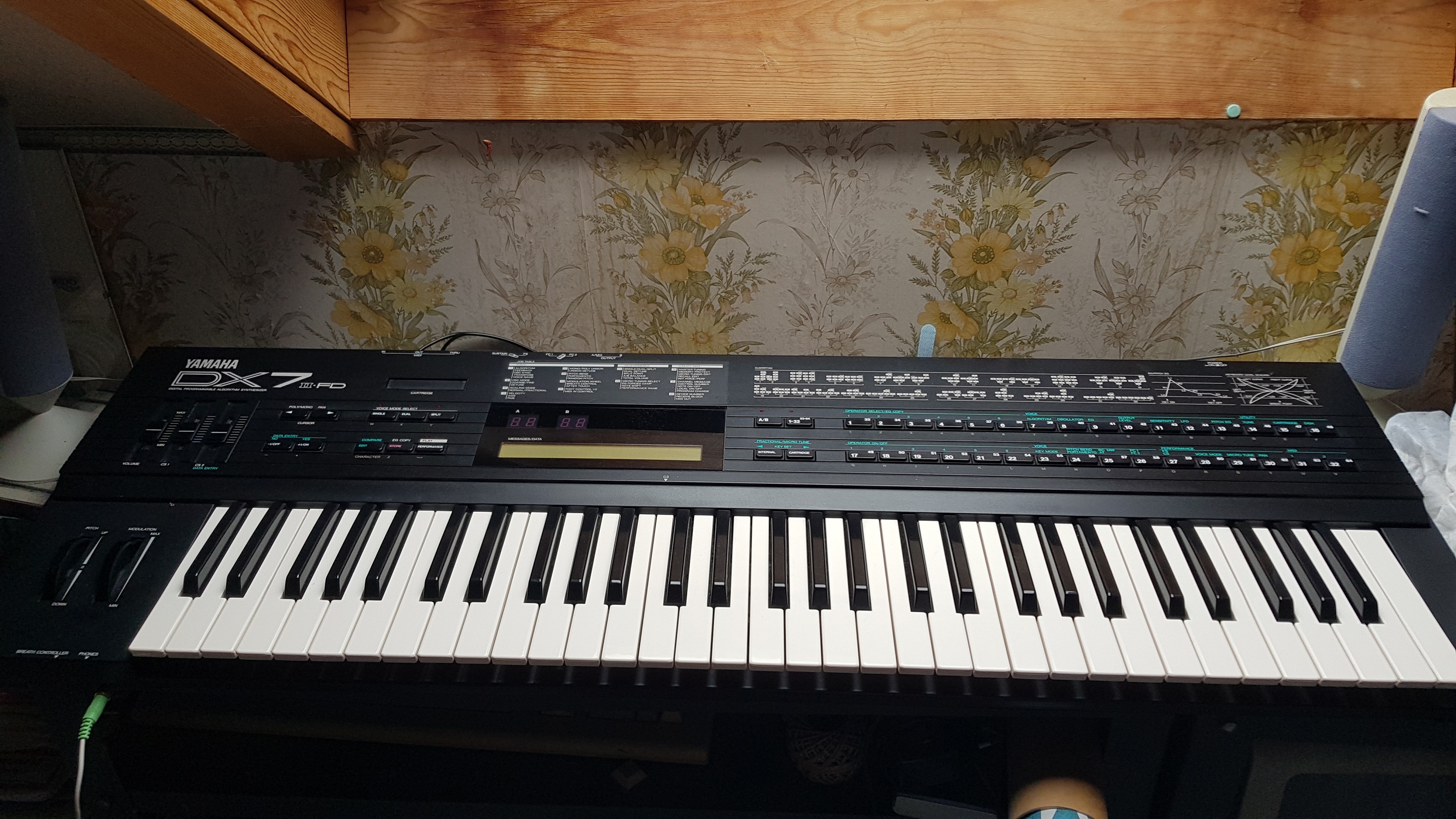
Yamaha DX7 II FD
My DX7 II from 1987 is in pristine condition and even the floppy disc drive is working after 40 years! One of the previous owner has installed a E Grey Matter card which expands the DX7 to 4 banks of 64 patches and a sequencer.
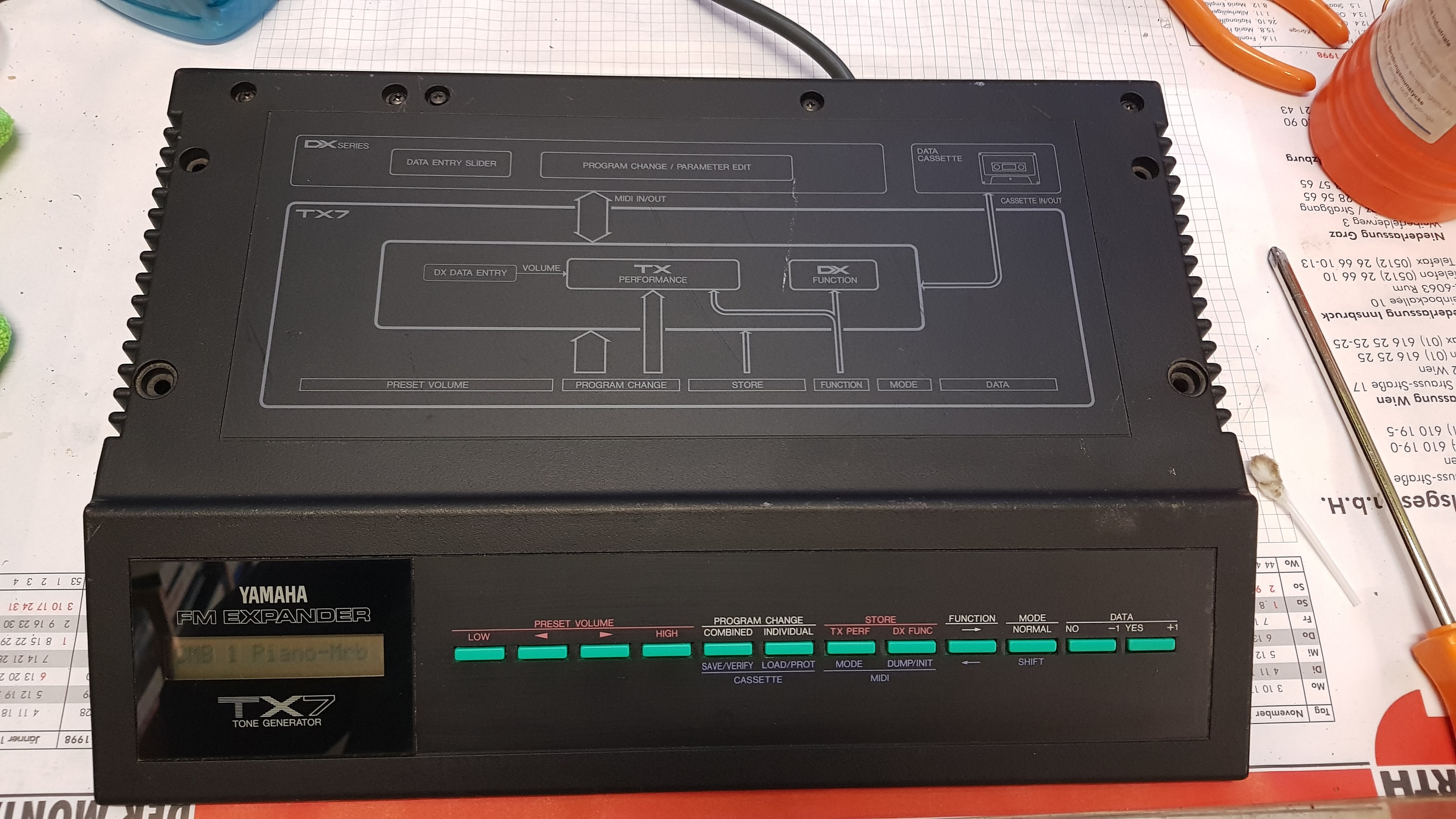
Yamaha TX7
The Yamaha TX7 is a desktop version of the DX7 MK1 released in 1985. As the front panels says, the TX7 is a FM Expander for the DX7. You can play it via MIDI stand alone or you can connect it to a DX7 MK I to modify the patches (or nowadays modify the patches with MIDI / SYSEX).
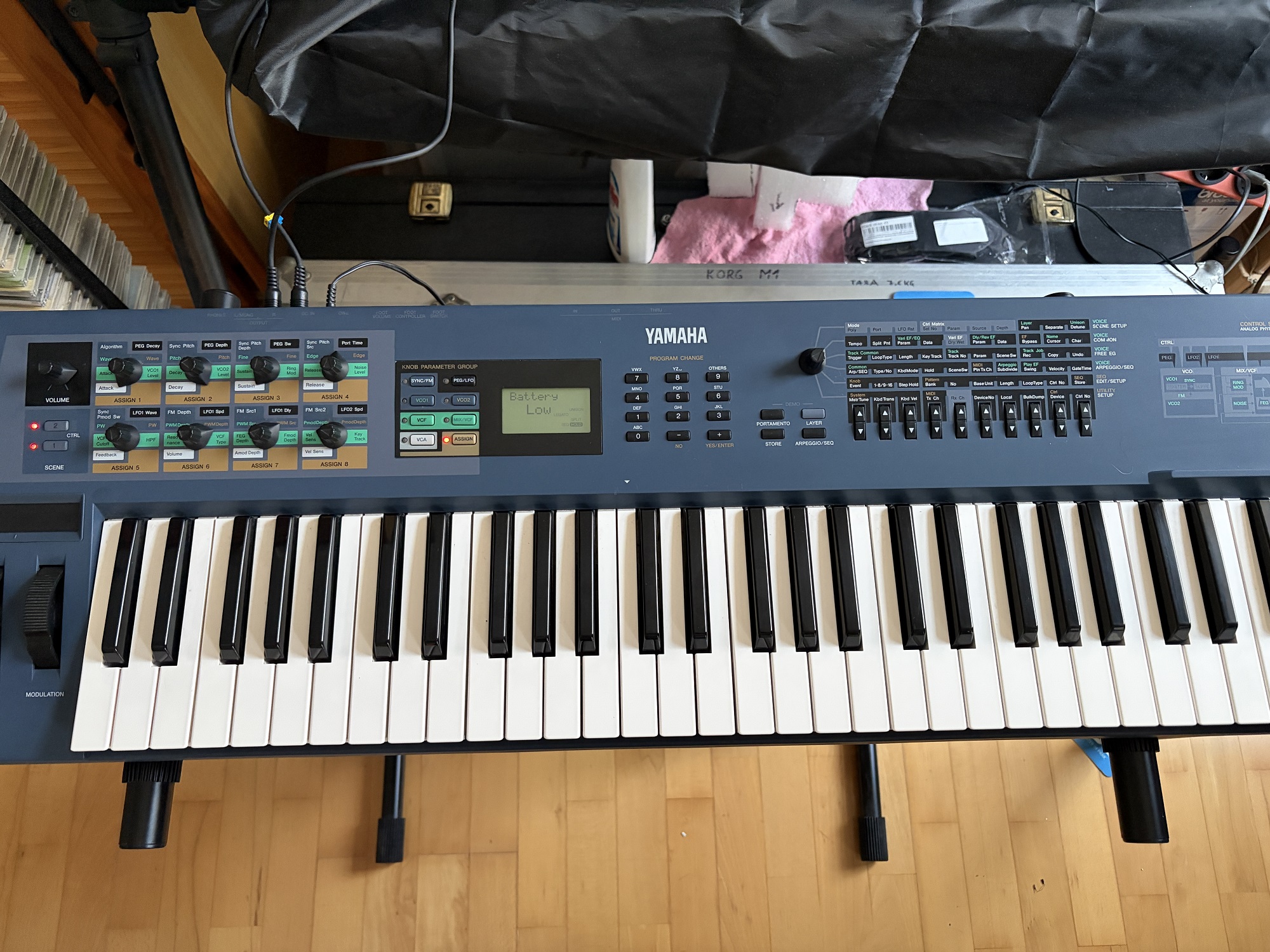
Yamaha AN1x
The Yamaha AN1x is a DSP-based analog modeling synthesizer (a.k.a. virtual analog synthesizer), produced by Yamaha Corporation from 1997 to 1998. Mine came in good condition. It just needed a good cleaning and a new battery.
Roland D-50
Roland's answer in 1987 to the success of the Yamaha DX7 was the Roland D-50. Prices for the D-50 are stable but the memory cards are getting grazy. Does one buy a card with 88 patches for 100 EUR? Seriously? All OEM patches are available as SYSEX in the internet and can be loaded with MIDI anyway. In the meantime I own one PN-D50-00 (which should come with each D-50), a PN-D50-02 and PN-D50-03 in my collection and I'm still searching for card 01, 04 and 05 and a RAM card.
On both my D-50 I have replaced the tactile buttons and one needed a new volume slider. I have recapped one power board.
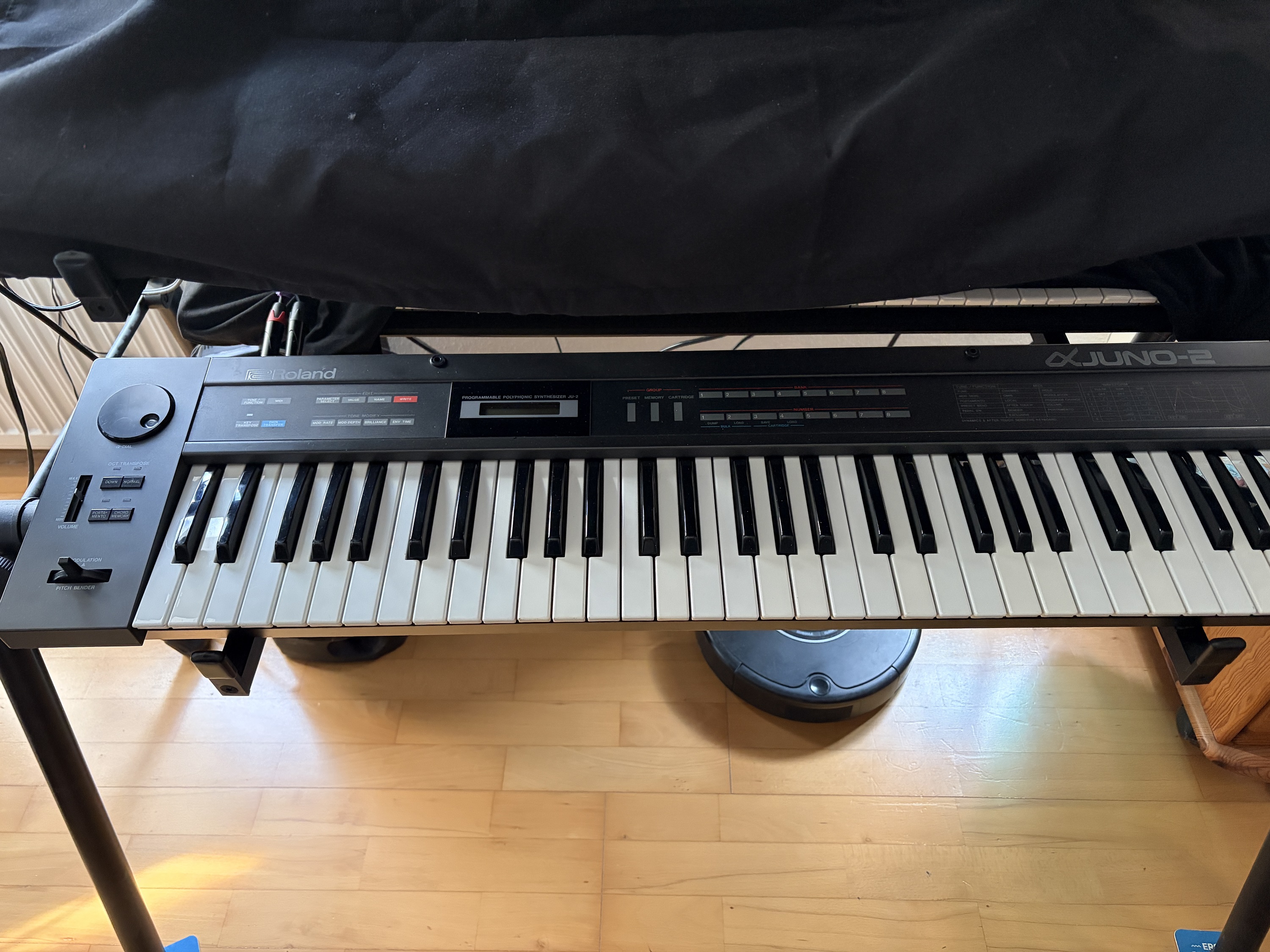
Roland Alpha Juno II
The Roland Alpha Juno II expanded on the JU-1 by offering an additional octave of keys (making it a full 61 key synth), incorporating velocity sensitivity, aftertouch, and including a cartridge slot for patch storage. A factory preset called "What The" became popular in rave, hardcore techno and jungle music, earning the moniker "Hoover sound" due to its distinctive pitch modulation effect.
My JU-2 came with a broken volume slider therefore it was replaced.
Roland JUNO-D
This synthesizer from 2004 doesn't fit in the list, but it carries the name "Juno" in it even if it has nothing to do with that legacy.
My JUNO-D went through a technical repair and is working fine now.

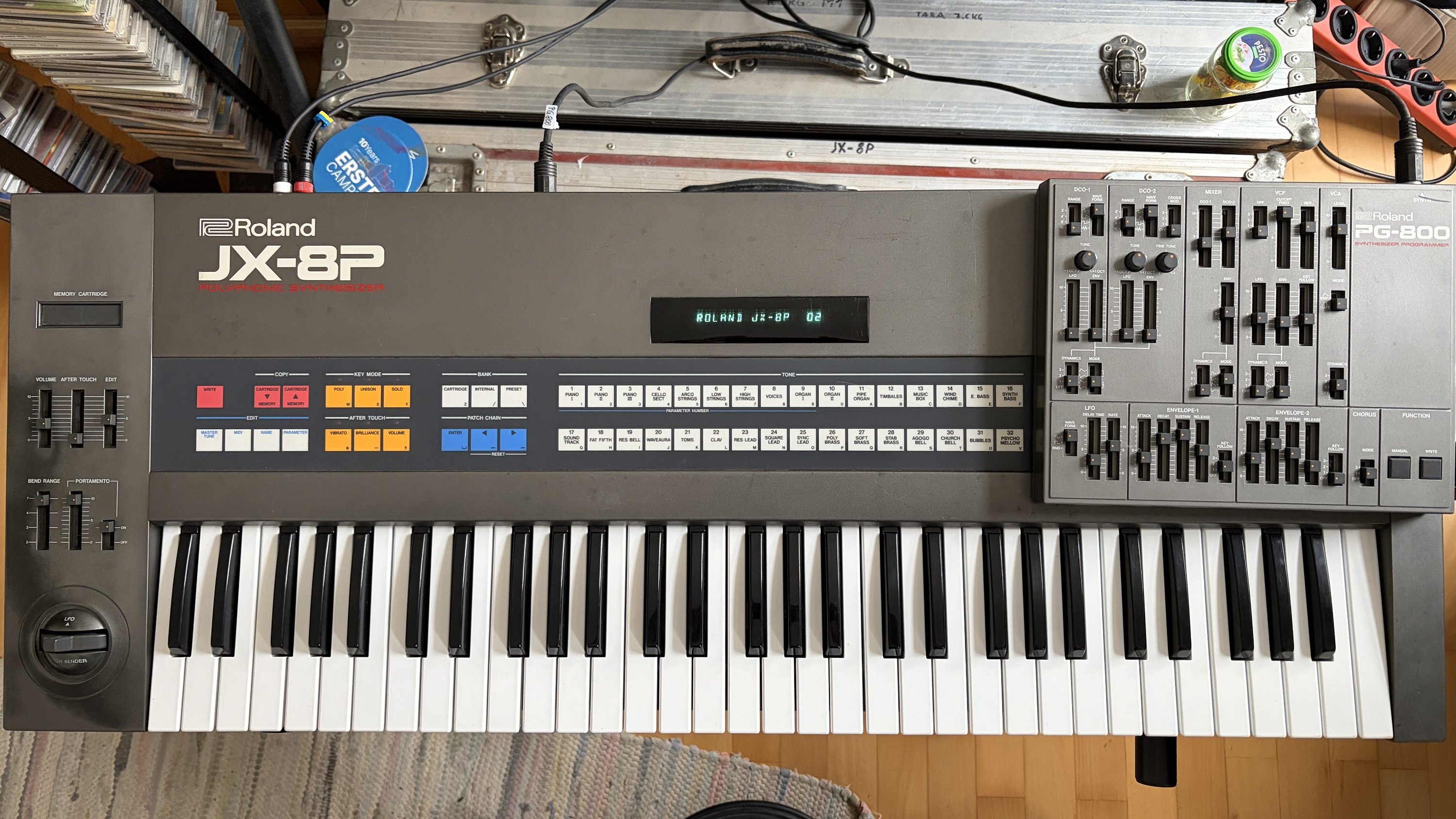
Roland JX-8P + PG800
The Roland JX-8P is a 61-key, velocity- and aftertouch-sensitive, six-note polyphonic, almost entirely analog synthesizer released by Roland in 1985. It was used by Europe in "Final Countdown". The PG800 is an external programmer and makes sound creation easier with common sliders.
My Roland JX-8P has really seen better days. I had to replace all sliders - you need different types (mono and stereo) or a modification of the volume board to make it work with stereo sliders. On the Keybed PCB one trace needed to be patched as 8 keys weren't working. The JX-8P still needs some work (e.g. aftertouch) but it's playable and sounds great. The PG800 just needed some cleaning and is good condition.
Roland PRO-E
The Roland PRO-E is an arranger keyboard with 3 octaves from 1989. The case fits very well to the D-50. It was part of a bundle with other gear. There are 14 "Music Style Cards" type SC1 available, whereof I have the following:
- TN-SC1-06 Piano Bar
- TN-SC1-07 Latin
- TN-SC1-11 Dance 1
- TN-SC1-13 Dance 3
- TN-SC1-14 Dance 4
Roland A-30
The Roland A-30 is a 76-key MIDI keyboard controller released by Roland in the early 1990s (1992–1996). Designed primarily for stage and studio use, it functions strictly as a controller, meaning it has no internal sounds and must be connected to an external synthesizer, sound module, or computer via MIDI.
Roland SC50 Sound Canvas
The Roland SC-50 Sound Canvas is a classic half-rack MIDI sound module released by Roland in 1993. It was introduced as a streamlined, budget-friendly variant of the highly successful SC-55 MK II. Because it fully supports both General MIDI (GM) and Roland GS formats, the SC-50 became immensely popular for DOS PC gaming, MIDI file playback, and early desktop music production.
In my setup the SC50 is mainly connected to the Roland A-30.
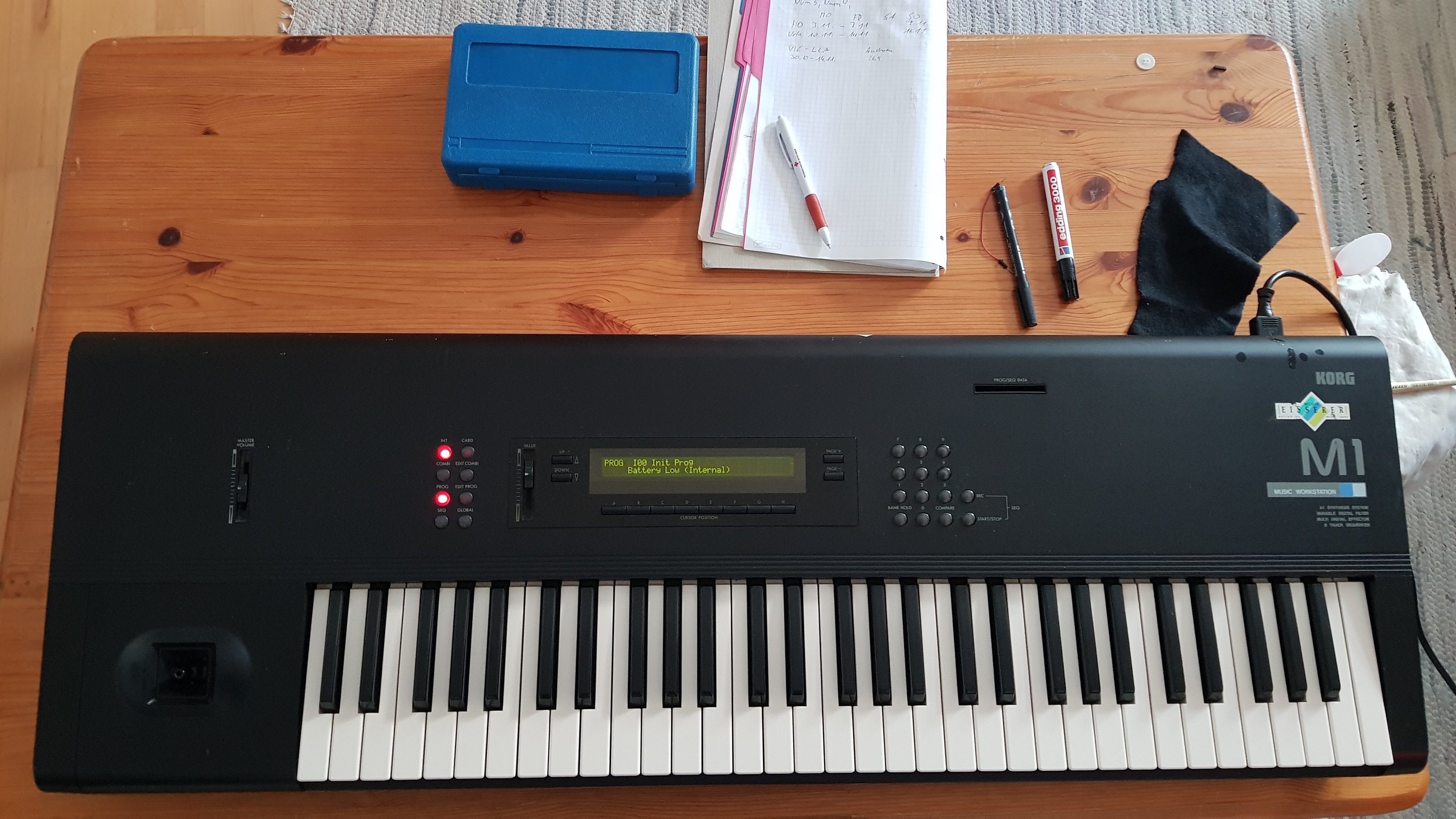
Korg M1
Known as the best selling synthesizer: The Korg M1. My first Korg M1 was in quite rough shape and needed a LCD replacement. The other had some minor dings and dents but is looking OK now. I have replaced the tactile buttons on both M1. Dismantling the Korg M1 takes quite a time as there are several layers of PCBs and you have to "dig down" in the grave until you come to the board with the tactile buttons.
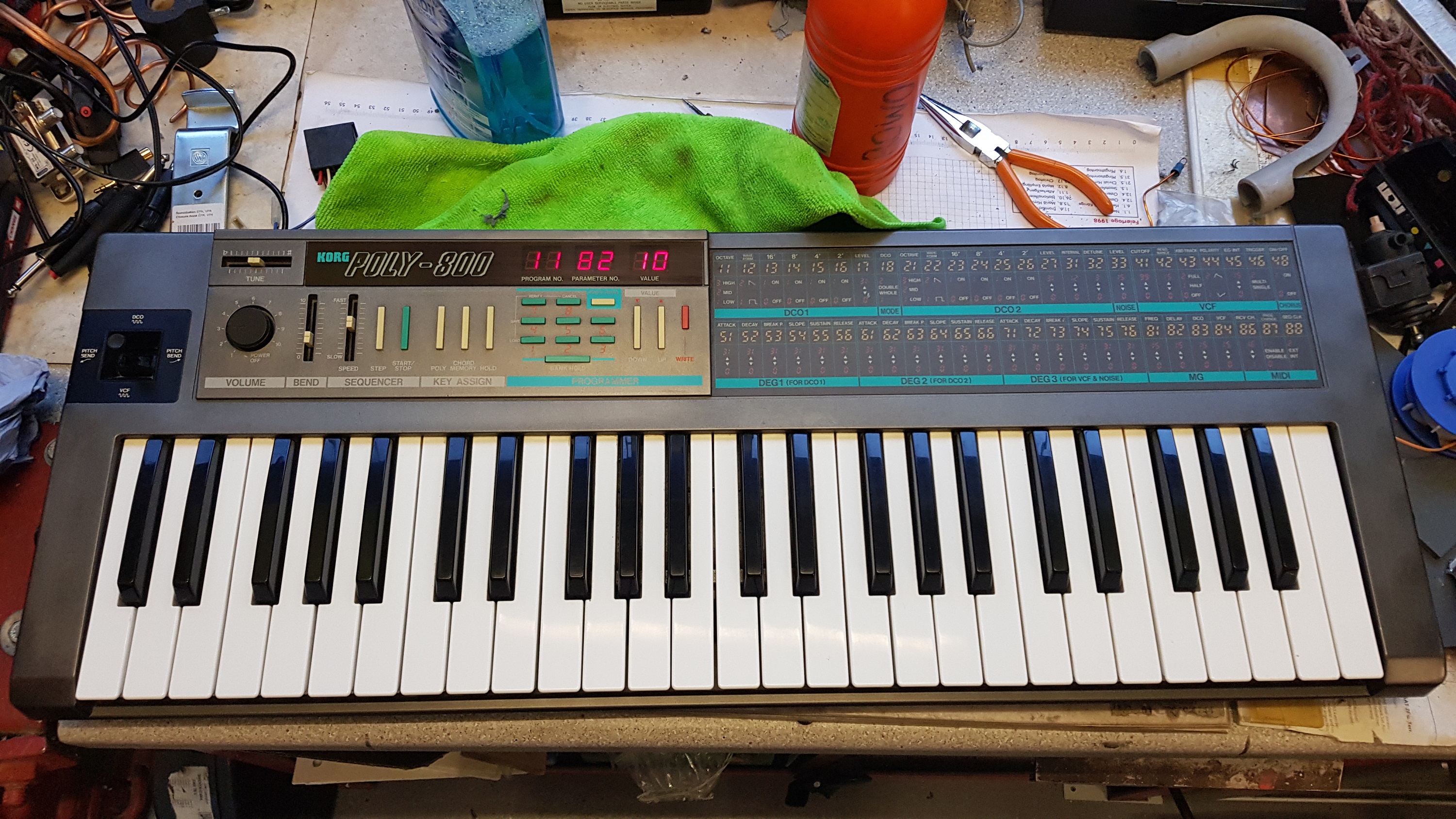
Korg Poly-800
That little synth from 1983 is my first "analog" synthesizer. Even it has just 6 seven segment digits, programming is quite easy. It has also strap pegs and can be powered by batteries so you could play it like a keytar. Market prices for the Korg Poly-800 are still low.
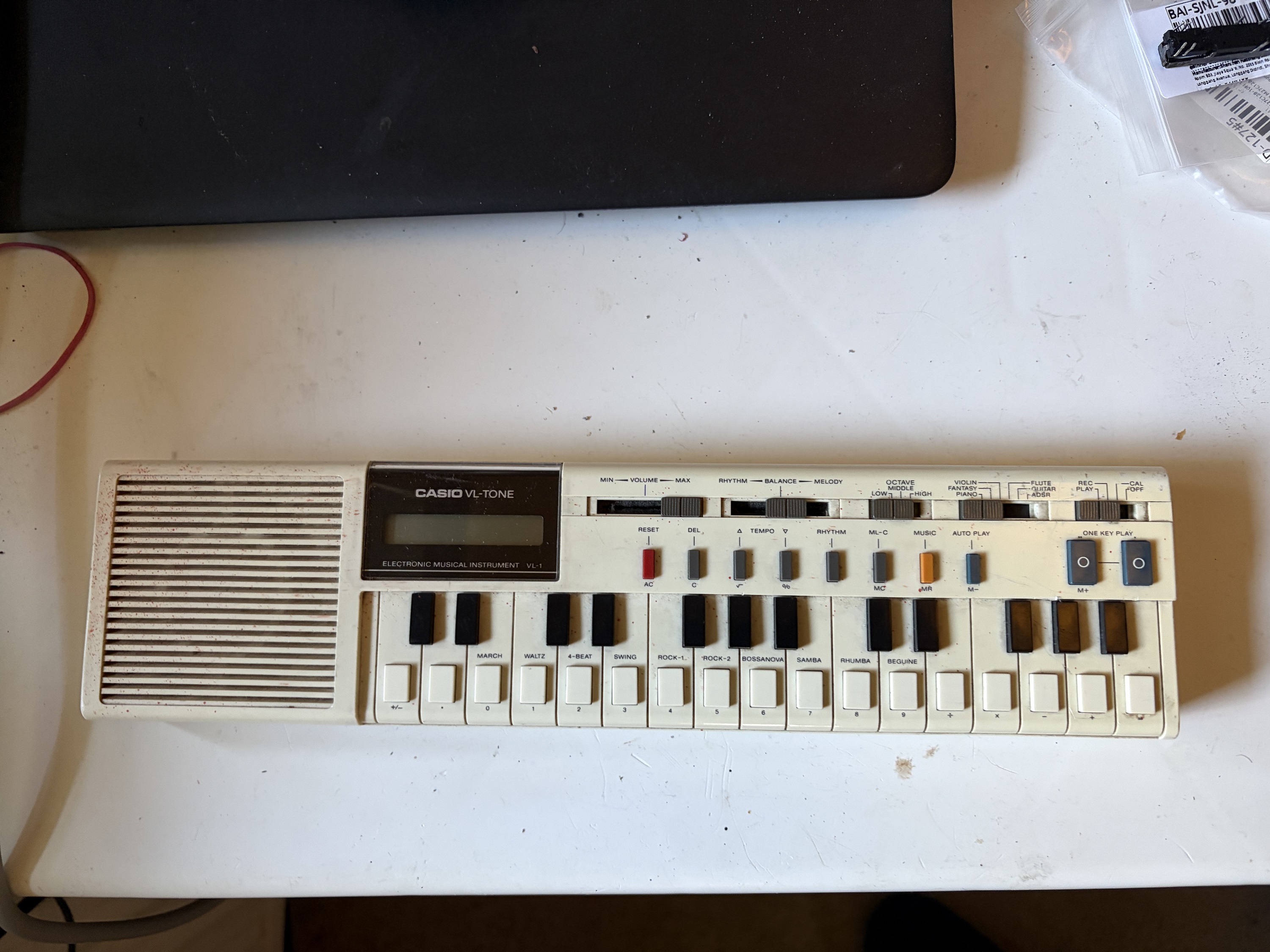
Casio VL-1 / Casio Tone-1
The Casio VL-1 was the first instrument of Casio's VL-Tone product line, and is sometimes referred to as the VL-Tone. It combined a calculator, a monophonic synthesizer, and sequencer. Released in 1981, it was the first affordable commercial digital synthesizer, selling for $69.95. In Europe it is known to be used in the One Hit Single "Da Da Da" by the German Pop Group Trio.
Not a Synth: Behringer RX1602
To combine all the line signals I'm using a simple RX1602 to feed the combined signal to an amplifier.
Where do we go from here? My Synthesizer Bucket List
I should not buy more gear, nevertheless I still observe the market for interesting gear. It's not so much that I wouldn't like to own a MiniMoog, Oberheim OBXa or real Roland Juno but the current market prices for these devices are nuts. So I decided to collect the lower end of synths.
History
First upload: 2026-04-03 | Version: 2026-10-24